St. Augustine, FL & St. Johns County
Dryer Vent Cleaning St Augustine — Fix Long Drying Times & Weak Airflow
Slow drying, a musty smell, or it’s just been a while — we fix it with real rod-and-brush cleaning and a before-and-after airflow check, not a guess.
- Locally focused — St. Augustine & St. Johns County
- Before & after airflow reading on every job
- Residential & commercial service
Why St. Augustine Homes Need Dryer Vent Cleaning More Than Most
If you live in St. Augustine, your dryer vent works harder than one in a house up in Ohio or Colorado. That’s not a sales line — it’s how the physics works here. St. Augustine sits in a humid subtropical climate, and that moisture-heavy air gets pulled into your dryer’s exhaust system along with the warm air from every load. In a dry climate, lint tends to blow through and out. Here, it’s more likely to stay damp just long enough to stick to the inside of the duct wall — and once a little bit sticks, more builds up behind it.
If you’re near the coast — Vilano Beach, Anastasia Island, St. Augustine Beach, Crescent Beach — there’s a second factor: salt air. It gets into exterior vent hoods, dampers, and any exposed metal ducting, and it speeds up corrosion. A vent hood that’s supposed to flap open and closed freely can seize up or crack faster out here than ten miles inland.
And if your home is in one of St. Augustine’s older neighborhoods — Lincolnville, West Augustine, Uptown along San Marco Avenue, or the Historic Downtown core — there’s a third factor: the ducting itself. Older installs sometimes used longer runs and more bends than you’d ever install today. More bends mean more surface area for lint to catch on its way out.
Warning Signs Your Dryer Vent Needs Attention
A clogged vent doesn’t fail without warning. It gives you signs first:
- Clothes take two cycles or more to dry when they used to take one
- The top of the dryer or the outside of the unit feels noticeably hot to the touch
- You smell a faint burning or hot-dust smell during a cycle
- Lint is visible around the outside vent hood, or airflow feels weak at the exterior vent while the dryer runs
- A musty smell in clothes even after a full dry cycle
- The exterior vent flap doesn’t open freely, or doesn’t open at all
- It’s been more than a year since it was last professionally cleaned
Any one of these on its own is worth a look. Two or more, and it is worth scheduling a dryer vent inspection before you run another load.
Not sure if it just needs a cleaning or something more? See our repair & replacement guide, or if you’re considering doing it yourself first, our DIY vs. professional comparison.
According to UL Solutions, clothes dryers cause roughly 15,600 structure fires in U.S. homes every year — and the single largest identified cause, at about a third of all dryer fires, is simple failure to clean the vent. Not a mechanical defect. Just lint that was never cleared out See our full dryer vent fire safety guide for warning signs and prevention tips. Along the way, a restricted vent also makes your dryer work harder and run longer than it should just to finish a load — which usually shows up as extra drying time, and often a bit more energy used, not just a fire-risk statistic.
For the complete list of symptoms to watch for — and which ones mean it’s more than just overdue — see our full guide to dryer vent warning signs.
How We Clean Your Dryer Vent — Not a Guess, a Measured Result
Most dryer vent cleaning gets done the same basic way: a rod goes in, a brush knocks some lint loose, and you’re told it’s “good now.” We do it differently.
- Inspection, then an airflow test, before we touch anything. We take a digital airflow reading at your exterior vent exit point before starting — an actual number, not a guess based on how it looks.
- Full-length rotary brush cleaning. A flexible, rotating brush system runs the entire length of your duct — from directly behind the dryer, through the walls or crawl space, to the exterior exit point.
- High-power vacuum extraction. As the brush works through the line, a high-power vacuum connected at the source pulls the loosened lint out in the same pass.
- Airflow test, after. A second reading once the job is done, so you can see the before-and-after difference directly.
- We show you the difference. Before-and-after numbers, plus a look at what actually came out of your vent.
This before-and-after airflow verification is something many dryer vent cleaning companies in this area skip — because measuring results takes more time than simply saying a vent is clean. We do, on every job.
Residential & Commercial Dryer Vent Cleaning in St. Augustine, FL
Whether it is a single home or a full portfolio of properties, our dryer vent cleaning service in St. Augustine follows the same measured process every time:
Residential Dryer Vent Cleaning
Single-family homes, condos, and townhomes throughout St. Augustine and St. Johns County. Whether you’re in a 1920s bungalow in Lincolnville with a duct run nobody’s touched in years, or a newer build near Nocatee or World Golf Village with a longer run built into an open floor plan, we clean it the same thorough way.
Commercial & Property Manager Dryer Vent Cleaning
If you manage a multi-unit property, vacation rental portfolio, or HOA community from Anastasia Island to the World Golf Village corridor, dryer vent maintenance isn’t optional — it’s a liability question. High-turnover laundry means vents clog faster. We work with property managers on recurring cleaning schedules. See our commercial & property manager page for details.
Areas We Serve
We provide dryer vent cleaning throughout St. Augustine and St. Johns County, including:
- Historic Downtown & Uptown
- Lincolnville
- West St. Augustine
- North City
- Anastasia Island
- St. Augustine Beach
- Crescent Beach
- Vilano Beach
- World Golf Village
- Nocatee
- St. Augustine Shores
- Ponte Vedra & Ponte Vedra Beach
Serving zip codes: 32080, 32084, 32085, 32086, 32092, and 32095. We also serve the wider St. Johns County area, including Ponte Vedra, Nocatee, and the rural western county.
Not sure if you’re in our service area? Get in touch and we’ll let you know honestly.
Why Homeowners Choose Us Over the Alternatives
As a local, professional dryer vent cleaning company serving St. Augustine and St. Johns County, here is what that looks like in practice:
- We measure results, not just “we cleaned it.” The before/after airflow test means you get a number, not a promise.
- We know this city, not just this zip code. This page reflects the actual neighborhoods, housing stock, and coastal conditions of St. Augustine — not a template with the city name swapped in.
- Straightforward pricing. No pressure, no upsell games — ask and we’ll tell you.
- We tell you the truth, even when it costs us the sale. If your vent doesn’t need cleaning yet, we’ll say so.
What a Service Call Like This Typically Looks Like
We’re a newer service in St. Augustine and St. Johns County, so rather than post reviews that aren’t ours to claim, here’s an honest look at the kinds of situations we regularly handle and how we approach them — based on common patterns across local homes, not any single household.
Long, Bent Vent Run in an Older Home
Many homes in Historic Downtown St. Augustine were built before dryers were standard, so the vent run is often long, narrow, and routed through several tight bends to reach an exterior wall. That combination restricts airflow even when the lint trap is cleaned every load.
Newer Home, Still Running Long Drying Cycles
Newer builds around Nocatee usually have shorter, straighter vent runs, but that doesn’t make them immune. A vent cap clogged with lint or debris, or a run that’s slightly undersized for the dryer, can still cause noticeably longer cycles.
Salt Air Accelerating Wear on Vent Hardware
Homes closer to the coast tend to see faster corrosion on metal vent covers, clamps, and screws. A damaged or rusted-shut flap can trap moist air and lint right at the exterior wall, which isn’t always obvious from inside the house.
Multiple Units, Inconsistent Maintenance History
For rental properties and managed units across St. Johns County, vent maintenance history is often inconsistent between tenants. First-time cleanings on these units are more likely to turn up significant lint buildup than a home with a known cleaning schedule.
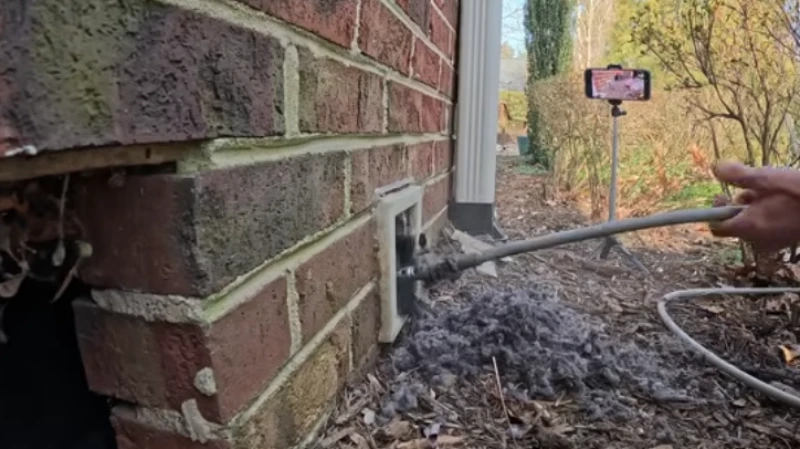
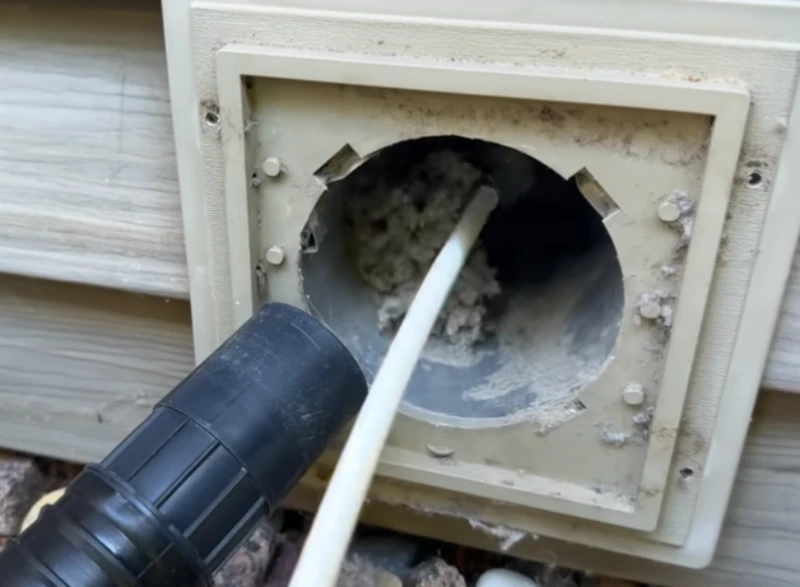
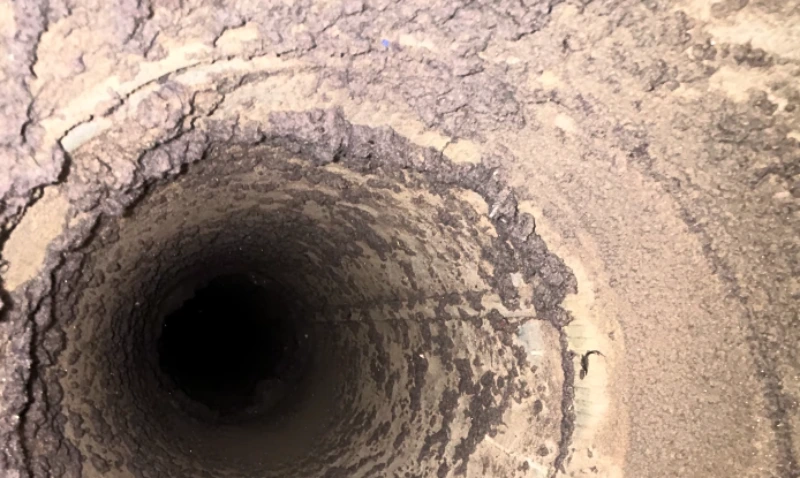
Real Dryer Vent Cleaning Photos From St. Augustine Homes
A look at actual vent conditions and cleaning work from recent service calls in the area — not stock photos.

Saint Augustine Dryer Vent Cleaning You Can Trust
Homeowners searching for Saint Augustine dryer vent cleaning choose us because every visit comes with a documented airflow reading, not a guess about what’s clogging your line.
Frequently Asked Questions About Dryer Vent Cleaning in St. Augustine, FL
How much does dryer vent cleaning cost in St. Augustine, FL?
Pricing generally depends on the number of stories, the length of the duct run, and how many bends the vent has — a straight, single-story run costs less to clean than a long run with multiple turns through an attic or crawl space. See our full dryer vent cleaning cost guide for a breakdown of what affects price, or contact us for a free, no-obligation quote based on your specific home.
How often should I get my dryer vent cleaned in St. Augustine?
Most manufacturers and fire-safety organizations recommend once a year for an average household. In St. Augustine specifically, homes closer to the coast or with longer, older duct runs often benefit from cleaning every 6 to 9 months, because of how humidity and salt air affect lint buildup here compared to drier inland climates.
Can I clean my dryer vent myself?
For a short, straight run with no bends, a DIY rotary brush kit can work fine. For longer runs, multiple bends, roof-mounted vents, or gas dryers, we’d recommend a professional — it’s easy to damage aluminum or vinyl venting with the wrong tool pressure, and a gas dryer adds a real safety consideration around the gas line when the unit gets moved.
What’s the difference between dryer vent cleaning and air duct cleaning?
These get mixed up constantly, and they’re not the same service. Air duct cleaning addresses your home’s HVAC heating and cooling ductwork. Dryer vent cleaning addresses the separate, dedicated dryer exhaust vent that runs specifically from your dryer to the outside of your house. A dirty HVAC system won’t cause a dryer fire — a clogged dryer vent can. See our full air duct vs. dryer vent comparison for more detail.
What are the signs my dryer vent is clogged or restricted?
Longer drying times, a hot-to-the-touch dryer exterior, a burning or hot-dust smell during a cycle, reduced airflow at the exterior vent, or a musty smell in dried clothes. If you’re noticing two or more of these, it’s worth having it checked.
Is dryer vent cleaning really necessary?
Yes — it’s genuinely necessary maintenance, not an upsell. Dryer fires caused by lint buildup are a well-documented and largely preventable fire risk that fire safety organizations track closely and continue to warn homeowners about. That said, not every home needs cleaning every 6 months regardless of usage, which is exactly why we test airflow before recommending anything.
Do you serve my neighborhood in St. Augustine?
We serve Historic Downtown, Uptown, Lincolnville, West St. Augustine, North City, Anastasia Island, St. Augustine Beach, Crescent Beach, Vilano Beach, World Golf Village, Nocatee, St. Augustine Shores, and Ponte Vedra — zip codes 32080, 32084, 32085, 32086, 32092, and 32095. Not listed? Get in touch and we’ll let you know.
Can I vent my dryer into my garage instead of outside?
No — venting a dryer into an enclosed space like a garage isn’t safe. It releases moisture, lint, and (for gas dryers) combustion byproducts into an enclosed area, and it violates standard building code, which requires dryer exhaust to vent directly outside.
Ready for a Dryer Vent That Actually Works the Way It Should?
Book your dryer vent cleaning today and get a real before-and-after airflow reading — not a guess, a number.
Serving St. Augustine, St. Augustine Beach, Vilano Beach, Anastasia Island, Lincolnville, World Golf Village, Nocatee, and all of St. Johns County.
Ready to get started? Dryer Vent Cleaning St Augustine residents can book in minutes, with a real before-and-after airflow number every time.
From Vilano Beach to World Golf Village, our dryer vent cleaning St Augustine FL team shows up with the same rod-and-brush process, because St Augustine dryer vent cleaning shouldn’t be a guessing game.