How Often Should You Clean Your Dryer Vent in St. Augustine’s Humidity?
The honest answer isn’t a single number — it depends on your household size, how you dry, and how humid the air moving through your vent actually is. Here’s how to work out a real schedule instead of guessing.
Why Humidity Changes the Math
A dryer vent’s job is to push hot, moisture-laden air out of your home. In a drier climate, that air clears the duct quickly and lint moves out with it. St. Augustine’s humid subtropical air is a different starting point — the moisture your dryer is expelling is competing with moisture already in the air, so lint inside the duct stays damp longer, clings to the duct walls more readily, and compacts instead of blowing through. That’s the mechanical reason the same household can need more frequent cleaning here than the same household would in Arizona or Colorado.
General Cleaning Frequency Guidelines
These are starting points, not fixed rules — your actual laundry volume and duct run length matter more than the calendar.
| Household Type | Typical Frequency |
|---|---|
| 1–2 people, average laundry load | Once a year |
| 3–5 people, regular laundry days | Every 6–9 months |
| Larger households or daily laundry | Every 4–6 months |
| Short-term rental / high-turnover property | Every 3–4 months, or per booking cycle for high-volume units |
If your home is in one of the situations we cover on our Historic Downtown or World Golf Village pages — a long, multi-bend duct run in an older home, or a newer build with a builder-grade vent cap — lean toward the shorter end of these ranges regardless of household size, since duct geometry affects airflow as much as usage does. When you’re ready, schedule a residential dryer vent cleaning.
Signs You’re Overdue, Regardless of the Calendar
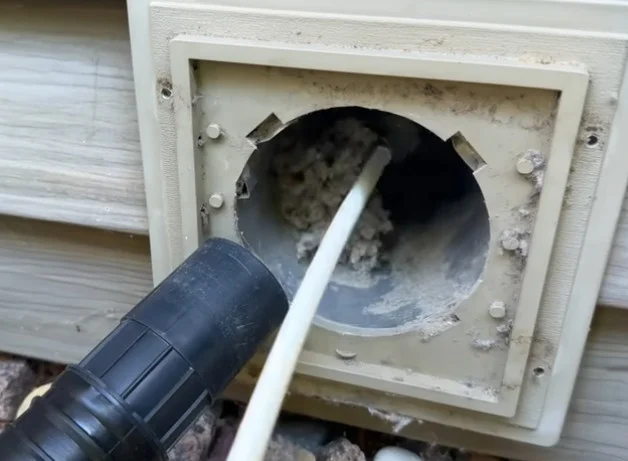
Frequency guidelines are a starting point — your dryer will usually tell you before the calendar does. Clothes taking noticeably longer to dry, a dryer that runs hot to the touch, a burning or musty smell during a cycle, or visible lint at the exterior vent hood are all signs the schedule above should move up, not down. We cover the fire-safety side of these warning signs in more detail on our Dryer Vent Fire Safety page.
The Coastal Factor
If you’re near the water — Anastasia Island, Vilano Beach, Crescent Beach — salt air adds a second variable on top of humidity: it accelerates corrosion on exterior vent hoods and caps, which can warp or stick a vent flap and quietly restrict airflow even when the duct interior is clean. We go into this in more detail on our St. Augustine Beach page — homes in that corridor generally benefit from a visual hood check more often than the interior-duct schedule alone would suggest.
Frequently Asked Questions
Does running a humidifier or living near the coast really change how often I need this done?
Yes, measurably. Both add moisture to the air the vent has to move lint through, which slows how quickly lint clears the duct and gives it more time to compact. It’s not usually dramatic on its own, but combined with a longer duct run or daily laundry use, it can meaningfully shorten the interval that makes sense for your home.
Is a shorter cleaning interval mostly about fire risk, or does it affect anything else?
Both. Restricted airflow from lint buildup is the underlying fire-risk factor we cover on our Fire Safety page, but it also means longer dry times and higher energy use well before it becomes a safety concern — most homeowners notice the drying-time change first.
Can I judge this myself, or do I need a professional inspection to know?
A quick way to get a read is timing a normal load — if a load that used to take 40 minutes is now taking 60 or more with no other changes, that’s a reasonably reliable signal on its own. An inspection is still the only way to see condition inside the duct itself, especially on longer or bent runs where buildup isn’t visible from either end.
Not Sure Where Your Home Falls on This Schedule?
A quick inspection tells you exactly where things stand — no guessing required.